14 Year old’s sucker punch breaks 13 year old’s jaw in two places.
See on www.cnn.com

A Tennessee couple faces murder charges for allegedly punishing the man’s 5-year-old daughter by making her chug excessive soda, leading to her death
See on www.cnn.com
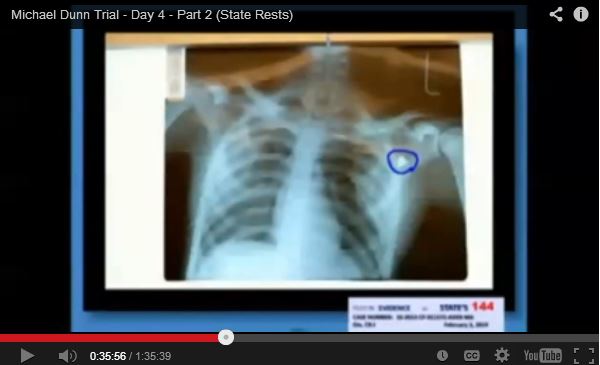
Jordan Davis. Projectile shot by Michael Dunn.
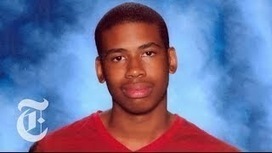
Jordan Davis shot by Michael Dunn.
Three bullets entered Jordan Davis.
Testimony by Dr. Stacey A. Simons, MD, forensic pathology specialist, paraphrased below.
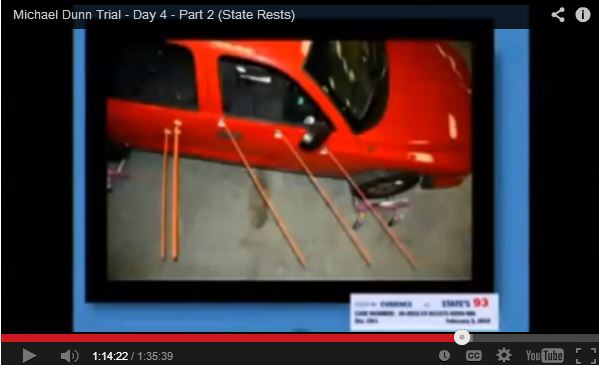
Bullet trajectories entering Durango.
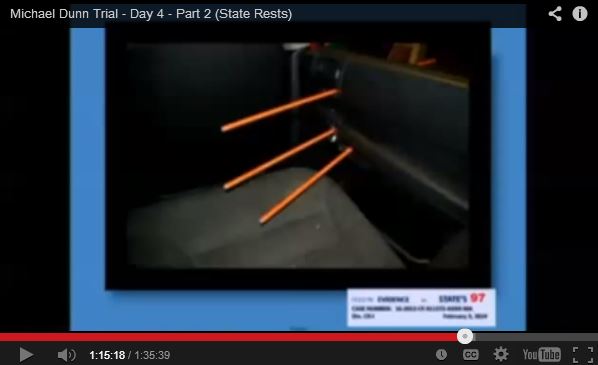
Bullet trajectories entering Durango.
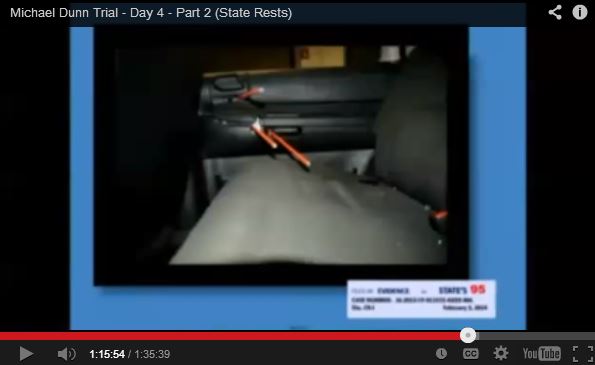
Bullet trajectories entering Durango.
“We in the Northern Plains are experiencing a deadly sub-zero frigid winter & heating propane shortage which has claimed at least one life; help us fix it.
Due to an extremely deadly winter here on the Northern Plains, a winter which has claimed the life of a tribal member, we are raising funds to deploy 20 home pilot projects to receive multi-fuel stoves to replace dependency on fossil fuels to heat our homes (namely propane). We will grow our fuel source and manufacture our own fuel sources in the immediate future to start this shift to renewables. We send our condolences to the family of the lady we lost to a home which could not afford to be heated. Google “Standing Rock propane crisis” for more info. email us at lastrealindians@gmail.com with any questions. We thank you genuinely. Lila wopila”
See on www.indiegogo.com
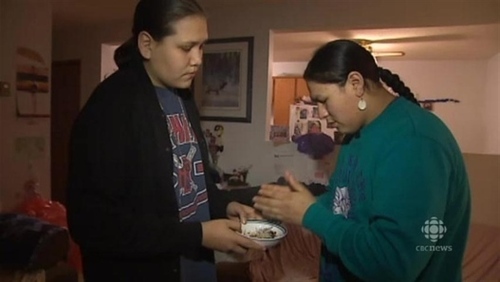
“The 17-year-old Manitoba teen lost a younger brother to suicide last year and he says smudging — the practice of burning traditional medicines — is one way that helps him cope with his grief.”
“it’s not that you did wrong, but that you’ll be perceived to have done wrong…” -Father of Jordan Davis
See on www.cbc.ca
“This video tells the story of a black teenager in Florida who was killed by a white man after an argument over loud music. The slain youth’s father shares his loss.”
See on newblackman.blogspot.com
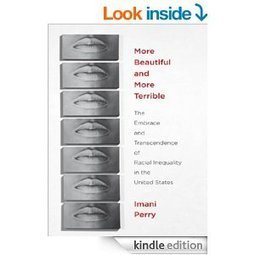
“For a nation that often optimistically claims to be post-racial, we are still mired in the practices of racial inequality that plays out in law, policy, and in our local communities.
One of two explanations is often given for this persistent phenomenon: On the one hand, we might be hypocritical saying one thing, and doing or believing another; on the other, it might have little to do with us individually but rather be inherent to the structure of American society.
More Beautiful and More Terrible compels us to think beyond this insufficient dichotomy in order to see how racial inequality is perpetuated. Imani Perry asserts that the U.S. is in a new and distinct phase of racism that is post-intentional neither based on the intentional discrimination of the past, nor drawing upon biological concepts of race.
Drawing upon the insights and tools of critical race theory social policy, law, sociology and cultural studies, she demonstrates how post intentional racism works and maintains that it cannot be addressed solely through the kinds of structural solutions of the Left or the values arguments of the Right. Rather, the author identifies a place in the middle space of righteous hope and articulates a notion of ethics and human agency that will allow us to expand and amplify that hope.
To paraphrase James Baldwin, when talking about race, it is both more terrible than most think, but also more beautiful than most can imagine, with limitless and open-ended possibility. Perry leads readers down the path of imagining the possible and points to the way forward.”
Tim Wise worked with this author (Professor Imani Perry Ph.D.,J.D.) in his movie ‘White Like Me‘
‘More Beautiful and More Terrible’ has 5 out of 5 stars and glowing reviews.
I’m looking forward to this breakdown of “post-intentional’ racism.
It seems like the idea goes in conjunction with Michelle Alexander’s book ‘The New Jim Crow’. Where Alexander explains that even though the laws behind the war on drugs do not mention race, the effects are that with limited budgets and resources (and subconscious racism?), police forces primarily focus their war on Black and Brown communities, even through white people use illegal drugs as much or more than Black and Brown communities.
And because you can’t have a war on an inanimate object, the war is waged on Black and Brown people and on Black and Brown communities.
See on www.amazon.com
“The one-drop rule was a construction of a white supremacist colonial system that depended on classifying race in order to protect its grip on power.
…
I don’t actually know any “white” person who goes around saying they’re black. But I’m gonna go out on a limb here and say that’s not a conversation I necessarily think we should shut down every single time. While they may not carry a “political” experience of blackness, there may be cultural, geographic even gendered, classed or religious reasons why a white person may say “hey, I’m black”.
…
I think sometimes we’re too quick to say “nuh-uh, you can’t just come over here and say that. Stay in your box. You can’t understand this pain, you can’t get this identity.” And we play misery poker and shut folks down.
…
I know plenty of Latin@s who are definitely “white-presenting”, but who consider themselves POCs because of language, culture, national ties etc. I also know some folks from South Asia and the Middle East (ex: Persians) who are officially considered to be “white/Caucasian” but who consider themselves POCs as a result of their identities as immigrants, as post-colonial subjects or even because of the dramatic shift in how the U.S. viewed people from South Asia, the Middle East and North Africa after 9/11. Marginalization and oppression don’t draw neat little lines and racism is often tied up with classism, sexism, homophobia, xenophobia etc. etc.”
My highlights from a great article from one of Steven Riley’s (of Mixed Race Studies) favorite blogs, Mixed Dreams, towards a radical multiracial/ethnic movement.
PS: POC means Person of Color
See on mixedreamers.blogspot.com

Twenty percent of America’s prison population is elderly. And in the next decade, nearly 100,000 inmates will die alone in their cells. One maximum security prison created a hospice program to care for dying inmates. The documentary, “Prison Terminal: The Last Days of Private Jack Hall”, follows one inmate as he approaches his final days. The film’s director, Edgar Barens, joins us to discuss his Oscar-nominated short film.
Last month, a small delegation of African American artists traveled through Israel and Palestine to get a firsthand look at the daily lives of Palestinians. What they saw shocked and angered them, and their eyewitness accounts are sure to spark debate here as heated as any confrontation in the Middle East. Bill Fletcher Jr., senior scholar with the Institute for Policy Studies, led the delegation and shares his perspective on the region. On the Ugly Side of the Wall By Bill Fletcher, Jr. “It felt like being in a huge prison.” That was how I responded to questions I was asked after leading a delegation of African Americans on a visit to the occupied Palestinian territories this past January. Yes, there are other ways of describing the experience. The land is beautiful; the people are generous; and with every glance, one sees reminders of a history dating back thousands of…
Isabel Allende started her career as a prominent journalist in her native Chile. She became a political refugee after her cousin, Chilean president Salvador Allende, was overthrown and killed in a coup in 1973. As an exile in Venezuela, she reinvented herself into a human rights activist and author. More than 30 years later, she’s internationally renowned for her work. She joins us to discuss her latest book, “Ripper”.
Listen on Stitcher
Listen on Soundcloud
Listen on iTunes
Listen on PRI
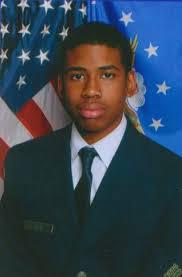
Jordan Davis
For updates to the Michael Dunn / Jordan Davis trial see BlackButterfly7’s ongoing coverage.
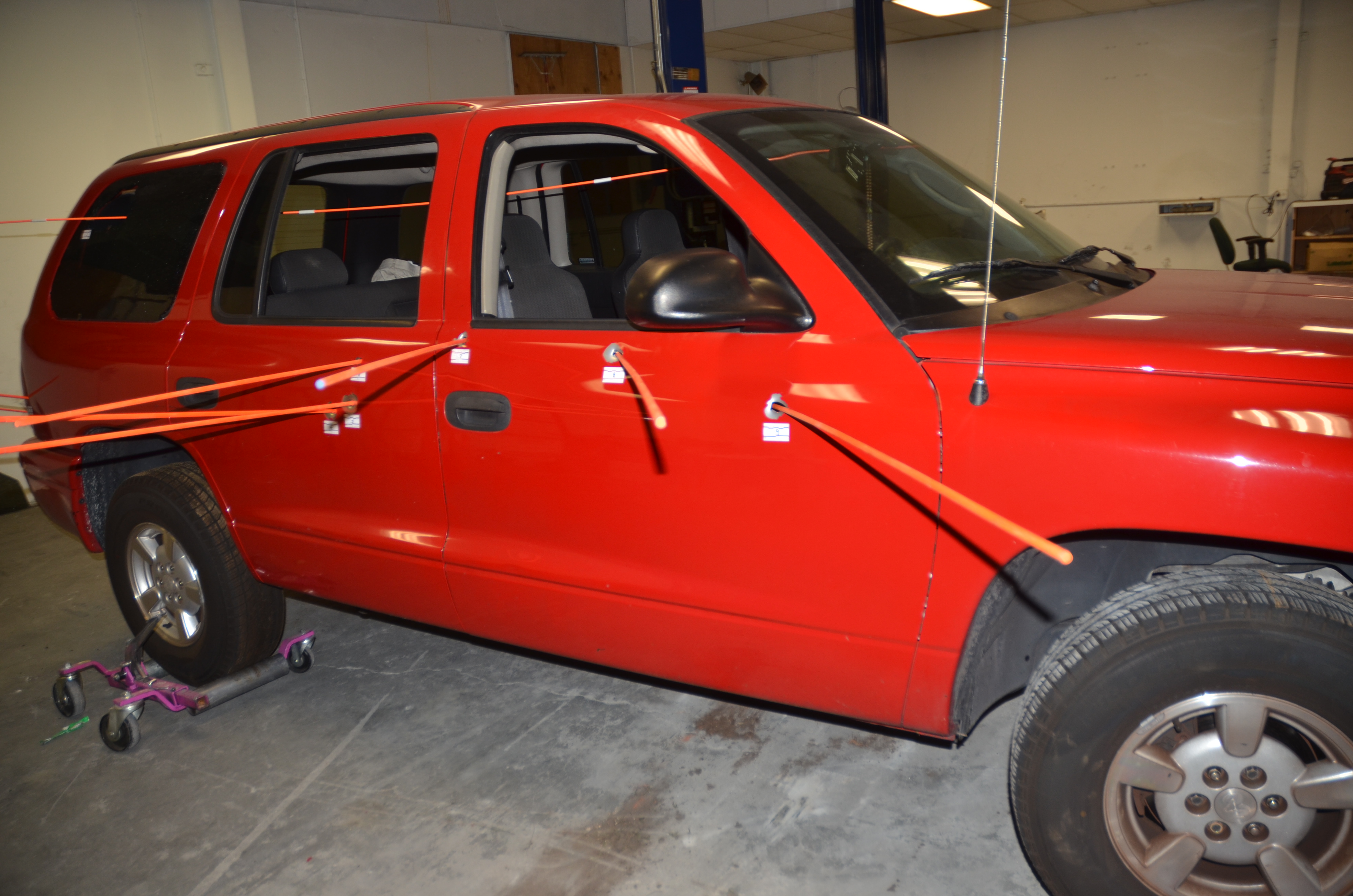
Michael Dunn shot into this SUV and killed Jordan Davis. No weapon was found on Jordan Davis or in this SUV.