Holder seeks to avert mandatory minimum sentences for some low-level drug offenders

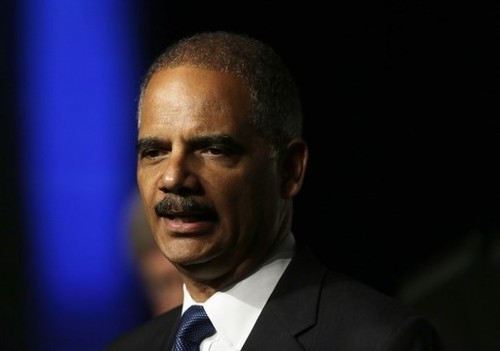
“We must face the reality that, as it stands, our system is, in too many ways, broken,” Holder said. “And with an outsized, unnecessarily large prison population, we need to ensure that incarceration is used to punish, to deter and to rehabilitate — not merely to warehouse and to forget.”


“A vicious cycle of poverty, criminality and incarceration traps too many Americans and weakens too many communities,” Holder said Monday. (Excerpts of his ­prepared remarks were provided Sunday to The Washington Post.) He added that “many aspects of our criminal justice system may actually exacerbate these problems rather than alleviate them.”


It is clear that “too many Americans go to too many prisons for far too long and for no truly good law enforcement reason,” Holder said. “We cannot simply prosecute or incarcerate our way to becoming a safer nation,” he added later in the speech.


Holder is calling for a change in Justice Department policies to reserve the most severe penalties for drug offenses for serious, high-level or violent drug traffickers. He has directed his 94 U.S. attorneys across the country to develop specific, locally tailored guidelines for determining when federal charges should be filed and when they should not.


Community Village‘s insight:

Progress!

See on www.washingtonpost.com

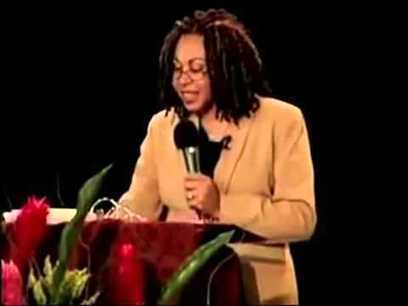
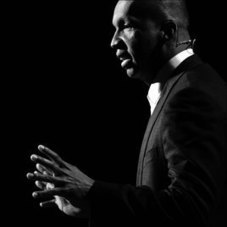
Dr. Joy DeGruy-Leary • Post Traumatic Slave Syndrome (Full Lecture)

Dr. Joy DeGruy holds a Bachelor of Science degree in Communication, a master’s degree in Social Work (MSW), a master’s degree in Clinical Psychology, and a Ph.D. in Social Work Research. Dr. Joy DeGruy is a nationally and internationally renowned researcher, educator, author and presenter. She is an Assistant Professor at Portland State University and the President of JDP Inc. Dr. DeGruy has over twenty-five years of practical experience as a professional in the field of social work. She conducts workshops and trainings in the areas of mental health, social justice and culture specific social service model development.

Published Works:

Dr. Joy DeGruy authored the book entitled Post Traumatic Slave Syndrome: America’s Legacy of Enduring Injury and Healing, which addresses the residual impacts of trauma on African Descendants in the Americas. Post Traumatic Slave Syndrome lays the groundwork for understanding how the past has influenced the present, and opens up the discussion of how we can eliminate non-productive attitudes, beliefs and adaptive behaviors and, build upon the strengths we have gained from the past to heal injuries of today

Some parts of the video repeat so you may need to click ahead a few minutes here and there.

Community Village‘s insight:

I first heard Dr. Joy DeGruy on KPFA while driving. I couldn’t wait to get to a computer to share her work. She cuts straight to the heart of some of the mostly unspoken about racial justice issues in the U.S. @getgln

See on www.youtube.com

Ten Things to Know about the (1st) March on Washington

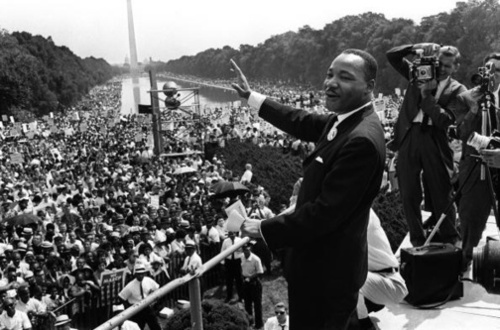
9. Following the march, male leaders met with President Kennedy, but no women were invited.  The group met to discuss the civil rights bill. It was the first time African-American leaders had been invited to the White House since 1901, when President Roosevelt dined with Booker T. Washington.


Community Village‘s insight:

I also didn’t know number 8. The most stirring parts of King’s “I Have a Dream” speech, delivered on the steps of the Lincoln Memorial during the march, were improvised. King was inspired by gospel legend Mahalia Jackson who shouted out from the crowd, “Tell ‘em about the dream, Martin!”

See on www.tolerance.org

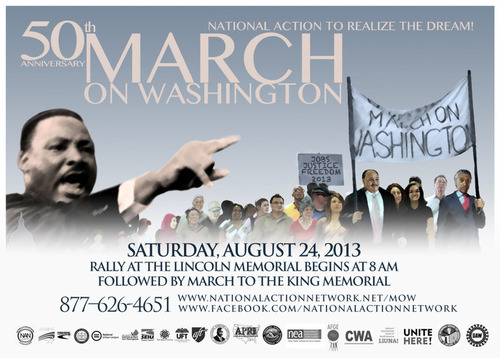
The planned March on Washington, 2013

There will be two marches to mark the 50th anniversary of the March on Washington on August 28th 1963, both ending at the Lincoln Memorial (links go to the march’s website):


See on abagond.wordpress.com

Building a New Racial Justice Movement – COLORLINES

Creating a multiracial movement for justice requires more than slapping the word “new” in front of “civil rights movement.”

“…in the main, we don’t want to talk about race, much less about racism. Our societal silence makes room for inventive new forms of discrimination, while it blocks our efforts to change rules that disadvantage people of color. Unless we say what we mean, we cannot redefine how racism works or drive the debate toward equity.”

by Rinku Sen

Community Village‘s insight:

In this article Rinku covers:

  • The Need for Plain Speech
  • Justice and Rights Aren’t the Same
  • Going Multiracial

See on colorlines.com

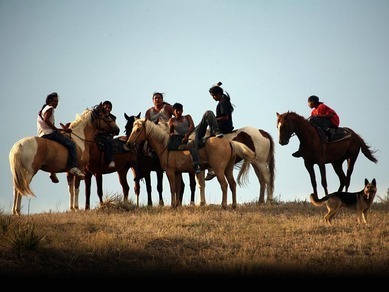
Aaron Huey: America’s native prisoners of war | Video on TED.com

Aaron Huey’s effort to photograph poverty in America led him to the Pine Ridge Indian Reservation, where the struggle of the native Lakota people — appalling, and largely ignored — compelled him to refocus.


Community Village‘s insight:

In Clear Lake county California there were Native Americans in a row of old run down houses. As a kid I would look at those houses from the back seat as my parents drove by them. They never explained who those people were and I never thought to ask :/

This video is a sort of condensed version of the documentary movie 500 Nations – but with modern photographs.

See on www.ted.com

Police Plant Drugs and Frame an Innocent African American Shop-Owner in New York [VIDEO]

ColorLines today carried a local news report from Schenectady County in New York of a local police department using undercover agents to purposely plant crack-cocaine in the shop of an African American business owner, with the intention of hauling him off to prison for up to seven years for a crime he did not even commit.”


Community Village‘s insight:

I wonder how many prisoners are incarcerated due to drugs being planted on them? 

See on ushypocrisy.com