Michael Brown’s Parents in Atlanta To Push For Police Body Cameras


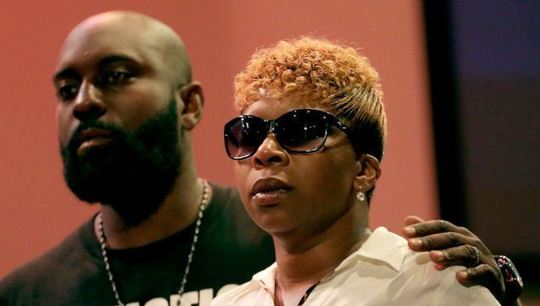
The family of slain teen Michael Brown, who senselessly died early last month at the hands of Ferguson, Mo., police officer Darren Wilson, are now in Atlanta to kick off a nationwide effort to arm police with body cameras, according to WSB-TV.


Source: goodblacknews.org

Detroit Mall Security Guards Who Killed Unarmed Black Man Won’t Be Charged

A prosecutor announced Thursday that no criminal charges will be brought in the case of an unarmed black man killed while being restrained by mall security guards.

McKenzie Cochran, 25, died at the Northland Mall in the Detroit suburb of Southlan…

Source: www.huffingtonpost.com


Cochran was killed in January (2014) and I am just now hearing about it.


So much oppression it’s hard to keep track of it all.


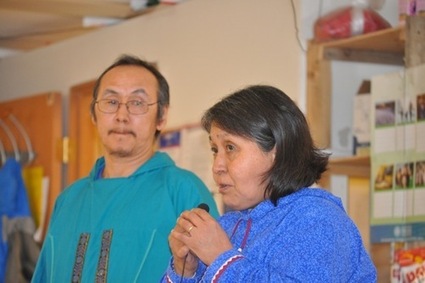
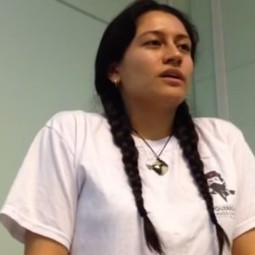
I Deserve Justice: Native Women From Alaska – 5 Part Series

Background:

In 1978, the United States Supreme Court issued its decision in Oliphant v. Suquamish Indan Tribe, declaring that American Indian Nations could no longer exercise jurisdiction over non-native offenders who commit crimes on tribal lands. Although the re-authorization of the Violence Against Women Act (“VAWA”) in March 2013 restores a portion of the jurisdiction that Oliphant stripped away to American Indian Nations, VAWAspecifically excludes 228 federally recognized tribes in Alaska. Consequently, as a result of Section 910 of VAWA 2013, Alaska Native women remain the only group of Native women whose tribal governments cannot protect them. To learn more, read: www.sliverofafullmoon.org

Source: joespub.tumblr.com

Overkill


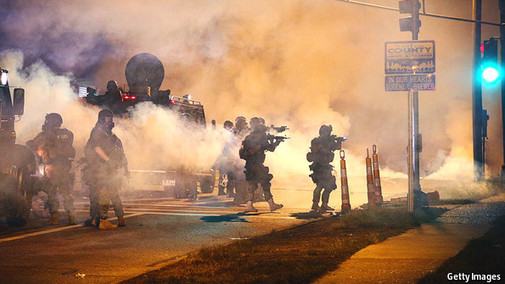
The police in and around Ferguson have shot and killed twice as many people in the past two weeks (Mr Brown plus one other) as the police in Japan, a nation of 127m, have shot and killed in the past six years. Nationwide, America’s police kill roughly one person a day (see chart).

This is not because they are trigger-happy but because they are nervous. The citizens they encounter have perhaps 300m guns between them, so a cop never knows whether the hand in a suspect’s pocket is gripping a Glock. This will not change soon. Even mild gun-controls laws tend to fail.


– Click through to read more –


Source: www.economist.com

After Nearly 23 Years of Legal Struggle, a Conviction Is Reversed

Everton Wagstaffe, who refused to leave prison on probation because he viewed it as a surrender of his claim of innocence in the death of a teenage girl, learned on Wednesday that he had prevailed in a struggle that he began from behind bars nearly 23 years ago.

A panel of state appeals court judges unanimously reversed the kidnapping convictions of Mr. Wagstaffe and his co-defendant, Reginald Connor, finding that Brooklyn prosecutors in 1992 and 1993 were responsible for “burying” documents that might have shown that detectives and the prime witness had lied. The panel also dismissed the indictments of the two men.

Source: www.nytimes.com

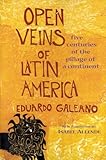
Open Veins of Latin America: Five Centuries of the Pillage of a Continent: Eduardo Galeano


Book Description


Since its U.S. debut a quarter-century ago, this brilliant text has set a new standard for historical scholarship of Latin America. It is also an outstanding political economy, a social and cultural narrative of the highest quality, and perhaps the finest description of primitive capital accumulation since Marx.

Rather than chronology, geography, or political successions, Eduardo Galeano has organized the various facets of Latin American history according to the patterns of five centuries of exploitation. Thus he is concerned with gold and silver, cacao and cotton, rubber and coffee, fruit, hides and wool, petroleum, iron, nickel, manganese, copper, aluminum ore, nitrates, and tin. These are the veins which he traces through the body of the entire continent, up to the Rio Grande and throughout the Caribbean, and all the way to their open ends where they empty into the coffers of wealth in the United States and Europe.


– Click through for more –

Source: www.amazon.com


Money can move across borders.


Raw materials can move across borders.
Manufactured goods can move across borders.


People (especially the poor) are highly restricted from moving across borders.


People should have the freedom and liberty to move where the resources and jobs are located.